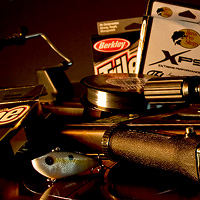
An Effective Winter Lure: The Lipless Crankbait

At first thought, the lipless crankbait is far from typical when it comes to fishing in the winter months.  When water temps get down into the 30’s, anglers tend to open up their “specialty” boxes filled with all kinds of winter-specific lures, such as hair jigs and blade baits.  And when they can’t connect with these few cold weather lures, they assume that nothing else will.

It is my assertion that the lipless crankbait is a top 5 wintertime bait.  Where it falls in that top 5 list is debatable, but today, I want to make a case for the lipless crankbait and explain why it works so well in the cold, and the techniques that will produce at this time of year with it.

A Lot to Contend With

1. Bass Sitting on Bottom

In the winter, you got a lot of things to contend with.  First and foremost, nearly every bass will be sitting on the bottom.  If your fishing up off the bottom in the winter, you’re probably not catching fish.

2. Bass Are Relating To Structure

Second, the fish are more likely to be relating to structure instead of cover.  In other words, it won’t be as easy as finding a laydown or stump and throwing at that cover.  They are going to be on structure, such as ledges and drop offs.  This kind of structure can only be seen with your sonar or good topo map.

3. Debris, and lot’s of it.

The third thing you’re contending with at this time of year is debris, be it on the surface or on the bottom.  Most of the time it’s soggy leaves.  It could also be really mucky algae-like slime that loves to cover any hard rocks or gravel.  Try fishing a pond at this time of year with a lipped crankbait and see how many times you foul up… it’ll be every time.

4. Bass Are Grouped Up

Lastly, the fish will be grouped up much more than they are at other times of the year.  This can be a good thing, but it does mean that areas of productive water are lessened.  You will have to cover lots of water quickly to find those groups of fish.  The only way to avoid having to cover lots of water is to know where the fish are already, but rarely is it that easy.  Your sonar is your best friend, but unless you have a color graph or know how to read and spot fish with grayline, even that can be tough since these fish are often sitting right on the bottom.

Lipless Crankbait: Covering All The Bases

So with all these factors in mind, let’s discuss why the lipless crankbait is a top performer for these conditions.

Since bass will be sitting on the bottom, a lipless crankbait is perfect for fishing right on the bottom througout the whole retrieve.  The beauty of the lipless crankbait is that there is no bill to dig into the bottom.  During the winter, kicking up mud and debris with a diving bill is an overpowering presentation to low-metabolism fish.  And with all the mucky leaves and slime on the bottom, a diving bill will foul up every cast.

Because a lipless crankbait is well, lipless, you can slowly swim it right on the bottom through the leaves and debris.  That front treble hook will not foul up on leaves as much as you think, and only the leading hook point will snag algae.  Though that leading hook point may snag slime, it won’t be enough to kill the action of the bait.  And since you are fishing the bait along the bottom, the fish won’t notice you snagged the slime anyway.  You just keep fishing the bait, knowing you have a little algae on that front tine.

So if you’re working your bait and you feel like you do snag a leaf, just give the rod a short and quick pump to shake it free or rip it off.  I’d say about 75% of the time it will clear the hooks, which is perfectly acceptable.  And for the best results, keep your rod tip high in the air as you are retrieving the lure, so as to keep the nose of the bait from digging into the bottom or debris.  This is a critical aspect of being able to work a lipless crankbait through the bottom without fouling up constantly.

Fluorocarbon line is a must for this technique because of it’s low-stretch and feel.  Bites will be light and you’ll need a low-stretch line to clear the hooks of debris.  It’s invisibility is a major plus as well.

Covering Water In Winter

Since bass are going to be grouped up and the areas of productivity will be fewer, covering water will be crucial in finding those congregations of fish.  Being a pro at reading your sonar is a major benefit, but let’s face it, not everyone is capable of interpreting their displays, nor does everyone have an expensive color sonar to work with.  But all this doesn’t matter if you’re fishing a lipless crankbait.  That lipless crankbait will be a much more efficient means of finding fish than your sonar.  Use your sonar to find good structure, then put the lipless crankbait to work to find the fish.

Colors, Sizes and Equipment

For lipless crankbaits in the winter, there are really only two color patterns that you need to concern yourself with.  A clear water color, and a stained water color.  For clear water, any shad pattern will suffice.  For dirty water, the name of the game is being seen, and there is no better color than firetiger for this purpose.

The size of your lipless crankbait is dependent on the depth you will be fishing.  For most applications, and for any water deeper than 7-8 ft., a 1/2 oz. bait is preferred.  For shallower water in the 4-6 ft. zone, a 3/8 oz. will be easier to fish, and any shallower should go to a 1/4 oz.

The reel doesn’t matter much, but use the highest speed gear ratio baitcaster you can.  By using a high speed gear ratio, it allows you to crank slower and thus have greater feel of your lure.  When you have to crank fast, you lose a lot of feel due to the movement of your hands.  The slower you can crank, the more sensitivity you will gain.

The rod is of utmost importance for this technique.  For deep water, you can get away with anything in the 6′6″ to 7′0″ range.  Anything shallower, such as when fishing ponds, the 7′0″ will make life much easier on you by keeping the bait’s nose from digging into the bottom and debris.  Your rod action should be Medium-Heavy.  A medium action rod tends to be too soft at the tip.  When you are reeling your lure through leaves and other debris sitting on the bottom, you’re going to be feeling all kinds of heaviness and muckiness through your rod, and with a soft, medium action rod tip, you’ll have way too much transmission coming down the rod.  All you are interested in is feeling the vibration of the lure, and feeling enough of the bottom to know you are on the bottom.  Anything more will create too much noise for feeling bites and make it harder to detect those bites when they happen.  This is a case where less sensitivity can be more.

Retrieve Speed

Most of the time, your goal will be to retrieve the lipless crankbait as slow as you possibly can while maintaining the lures vibration and keeping contact with the bottom.

The Bottom Line

Go to a winter tournament anywhere in the US and take a look at the baits anglers have tied on.  Very few, if any at all, will have a lipless crankbait tied onto one of their rods.  Perhaps this is why it is so effective at this time of year.  Put it to work in your cold water and you’ll find bass faster than everyone else.

Contradicting Bassmaster Frog Articles

This summer I read a column in August’s issue of BASS Times (a newspaper publication put out by B.A.S.S.) on page 8 titled, “Capitalizing on the Frog Frenzy: Valuable tips from top pros who are scoring with them“.  The article offered tips for fishing frogs from two of the best frog anglers on tour, Dean Rojas and Fred Roumbanis.

About halfway through the article, I read something that shocked me so much that I just had to call someone to share with them what I had just read.  So I made a call to a fishing colleague and read to him the following line, as printed in the BASS Times article…

“When bass explode on their frogs, Roumbanis and Rojas immediately slam home the hooks.  This breaks a widely held frog fishing tenet:  Thou shalt count to two before setting the hook.”

My friend on the other end was equally as shocked.  We couldn’t believe that we had been wrong about how to most effectively set the hook on a frog fish.  As avid frog anglers ourselves having much experience with these blowups, we’ve learned the hard way through the years how hair trigger hooksets can cause missed fish.  When a bass blows up on my frog, I had always stayed calm, reeled up the slack, and when I felt the fish, drove those hooks home.  It’s worked for me and it worked for my colleague.  Could we have been wrong all this time?

We were both skeptical to say the least.  But who am I to argue with Dean Rojas about frog fishing?  He designed the very frog I throw most often and is at the forefront of frog fishing strategy.  Not to mention, Fred Roumbanis backs this hookset technique as well.  How can I argue against all that firepower?

For weeks this BASS Times column lingered in the back of my mind.

Then, a few weeks later I noticed another Frog article posted at Bassmaster.com (the same organization that publishes BASS Times and Bassmaster Magazine).  It was published on August 28th and titled, “Rojas, Frogs and Bass: Part 2 of 2“.  I was ready to read what I thought would be the final nail in my own frog hookset coffin.

Anxiously reading, I finally got to the part I was waiting for.  It quoted Dean Rojas and read…

“Don’t get in a hurry when you get a strike. This is probably the biggest mistake most anglers make when they’re frog fishing. Wait at least a couple of seconds after the strike before you set the hook. Allow the bass to get the bait in his or her mouth before you try to cross its eyes and drive the hook home.

I know it’s not easy… But you’ve got to do it. If you snap the rod too quick, you’ll pull the lure back before the bass really has it and all you’ll get are regrets.”

Hold on. WHAT!?  Just a few weeks ago BASS Times told me Rojas and Roumbanis slam the hooks home immediately on a blow up.  Now, a couple weeks later B.A.S.S. is quoting Rojas as saying that setting the hook instantly is “probably the biggest mistake most anglers make when they’re frog fishing”.

What’s going on here?  Is one of them a misprint?  Did Dean change his mind within that 3-4 week period?  Maybe there was some sort of communication error between the writer and Rojas/Roumbanis?

Hopefully we’ll find out the true story here behind Rojas’ (and Roumbanis’) frog hookset strategy.  My money is on the “wait a bit to feel the fish first before setting the hook” tenet.  But that BASS Times column was very clear cut about this topic… no vagary at all regarding the immediate hookset recommendation.

If Dean and Fred concur that the immediate hook set is the more effective method, then I’ll take their word for it.. they are incredible frog anglers.  But with two strongly opposing columns like this, I think we are all left wondering what the true story is behind the frog hookset.  It’s a shame, because I really want to know.

So Dean… Fred… let us know what the real deal is on these hooksets.  We’re anxious to find out.

5 Fishing Products You Might Not Know About… But Should!

Let me share with you some absolutely invaluable fishing and boating products that I’ve discovered over the years that a lot of anglers either don’t know about or haven’t used. None of the items I list in this post are over $20, so I hope this encourages you to give them a try and really see for yourself how indispensable they are for an angler. They are in no particular order.

BPS Sinker Stops $1.69

If you fish weighted texas-rigged plastics (and I’m sure you do), then you’ve probably pegged your sinkers using either “screw-in” sinkers, toothpicks, or some other method. While I still use the “screw-in” sinkers for lighter weights, I really like these BPS Sinker Stops for pegging heavier flipping weights. These small rubber pieces slide on and grip your line just like a bobber stop does, but you can push the sinker stop down onto your weight so the weight doesn’t slide up and down your line.

Sinker stops are especially useful for anglers fishing thick grass, where you often have to use heavier (tungsten) flipping weights from 3/4 oz all the way to 1.5 oz or more. Because of the sheer size of these big tungsten weights and the bigger hooks you use for such applications, screw-in sinkers really under perform and often impossible to use. You will not find a better pegging method for heavier flipping weights than using a rubber sinker stop.

We have an Instructional Short fishing video all about sinker stops where we show you how to put it on your line and how it works, so check it out to see for yourself.

PRO’s Soft~Bait Glue $9.99

Okay gang, listen up. This isn’t super glue. So forget about Krazy Glue and all those other glues you can buy at Wal-Mart or Home Depot… they don’t work nearly as well. PRO’s Soft~Bait Glue works entirely different, and the benefits of using it are endless. Let me tell you a few of the most useful applications you can use it for.

Do you fish Jigs? Well, if you’re like me, you probably thread your plastic jig trailers onto the hook for that more “compact” look. If so, then you know how annoying it can be to constantly have your jig trailer sliding down the shank of the hook, balling up at the bend and keeping your jig from looking its best. And it’s a pain to have to fix!

So to prevent all this, after I put on a new jig trailer, I’ll just put a drop of PRO’s Soft~Bait Glue where the hook comes out of the top of the trailer. Just one drop. That drop will wick into the plastic and bond the hook to the trailer, preventing it from moving. No need to put the glue on the hook first and then slide the trailer over the glue. It wicks in!

And do you “Texpose” your texas-rigged baits? In other words, do you skin hook the hook point back into the plastic instead of leaving the hook point embedded in the middle of the bait? If you do, then you know how after awhile, that “texposed” skin layer that you want your hook point to rest under, eventually rips and tears, leaving you unable to keep the hook point in the plastic. Well here is the coolest little tip for using this glue. Simply put a small drop over the torn or ripped area where you texpose, and lightly dab it back and forth with your finger. Don’t worry, if you do it somewhat quickly you won’t stick yourself to the plastic. In fact, you won’t even get glue on your fingers. Doing this seals up the ripped area and leaves the perfect layer of skin for texposing. I show this to other anglers all the time and their eyes always light up when they see how effective it is.

There are endless uses for PRO’s Soft~Bait Glue, and is something I don’t go fishing without. Just don’t think that super glue is just as good. It doesn’t even come close.

Falcon FTO 501 Terminal Tackle Organizer $9.99

I really don’t know how I managed before I started using this terminal tackle organizer. It is especially designed for hooks, sinkers and other terminal accessories. The compartments are sized perfectly for various size hooks and sinkers and the nicest feature is it’s “tight” design. When you latch this box closed, the lid sits very tight to the compartment dividers. Why is this important? Your small and think hooks and swivels won’t wiggle their way into other compartments when the box is set on it’s side or jostled around in travel. It has happened slightly a couple times, but it’s been a rare occurrence and not a big deal when it has happened. So I can’t recommend this box more.

Bass Boat Saver $12.00

Everyone knows keeping your bass boat super clean and shiny catches more fish (right?). The problem people have is that they are exhausted after a 10 hour day on the water and the last thing they want to do is wash the boat when they get home. So if you’re Scum Line Larry and trailer home a boat looking like you were fishing the river in Wonka’s Chocolate Factory, I’m here to tell you it doesn’t have to be this way!

Bass Boat Saver is a liquid cleaner/protectant that you spray on your boat after you pull out of the water. Just spray it on and wipe off all the scum lines and muck with some cloths or paper towels. It cuts right through the mud and dirt and takes it right off, leaving a glitter shine that would make any redneck proud.

But in all seriousness.. I’ve tried other similar products that were marketed more for RV’s and Car’s, some of them being $60+ for the same size bottle, and they just don’t compare to Bass Boat Saver. I can do my 21′ rig in less than 10 minutes and have it looking like it was just washed and waxed. Best of all, it has UV protection in it so your boat will be protected from the sun.

For how good the product is, the price is very affordable. In fact, the price is the best part.. it’s only $12.00 for a 24 oz bottle.

Reaction Innovations BMF Flippin’ Hook $5.29

I have to admit, the first couple times I tested out this hook, I didn’t like it. I’m a big time heavy-cover fisherman and use flipping baits all the time, so I was really excited when this hook hit the market and bought a couple packs immediately to try out. At the time, I wasn’t a fan of using straight-shank flipping hooks. I was still using my Gammy Superline EWG’s in 4/0 and 5/0.

So the first couple times I tested this hook for flipping baits, I don’t know what it was, but I missed and lost some fish, had problems keeping my baits inline with my weights, and stuff like that. I was just about ready to say forget it and go back to my EWG’s. But a close friend of mine I was discussing this hook with told me to stick it out a little longer with the BMF hook. He hadn’t used it much either, but he was still optimistic even after hearing my initial results. I took his advice and continued rigging with the BMF hook. Little did I know everything would change from that point on.

Ever since, I’ve found the BMF hook to be far more effective with thicker flipping-style plastics than my former EWG’s (Extra Wide Gaps). The single biggest difference is the quality off the hookset using the straight-shank hook. The difference between the EWG’s and the straight shanks are very noticable, I get many more “roof of the mouth” hooksets with the BMF than I did with EWG’s.

The BMF hook is also very strong. It’s definitely not a thin-wire hook, so you can really crank those big fish out of cover quickly without fear of bending your hook. I’ve never bent any hook on a bass… but I’ve pulled bass out of weeds so thick with the BMF, that the strength I needed to get the fish to come out could have easily bent a lesser hook. At those times, I feel safe knowing I have a heavy-gauge hook on my line.

Another fabulous feature is the welded shut eye. The eye on most hooks is simply curled over, leaving a small (and sometimes sharp) gap between the shank and clipped end. Guys like me who flip with braided lines often have problems with our knot or line getting wedged in that gap, causing broken lines. Trust me, it happens. Well the BMF eye is welded shut from the factory… so that’s no longer a worry.

From what I understand, Reaction Innovations (the company that invented this hook), developed this hook to be used for their Sweet Beaver. Ironically, that’s one of the few baits I DO NOT like using a BMF hook with. There are just certain baits I still prefer EWG’s with. But more and more I am using the BMF hook for my craws, creature baits, tubes, etc. I only use BMF’s in 3/0, 4/0 and 5/0 sizes. Anything smaller than 3/0 should always be an EWG in my opinion.

And do you know what BMF stands for? Bad Mother Flipping. Perfect name if you ask me.

 
Bass Fishing Blog